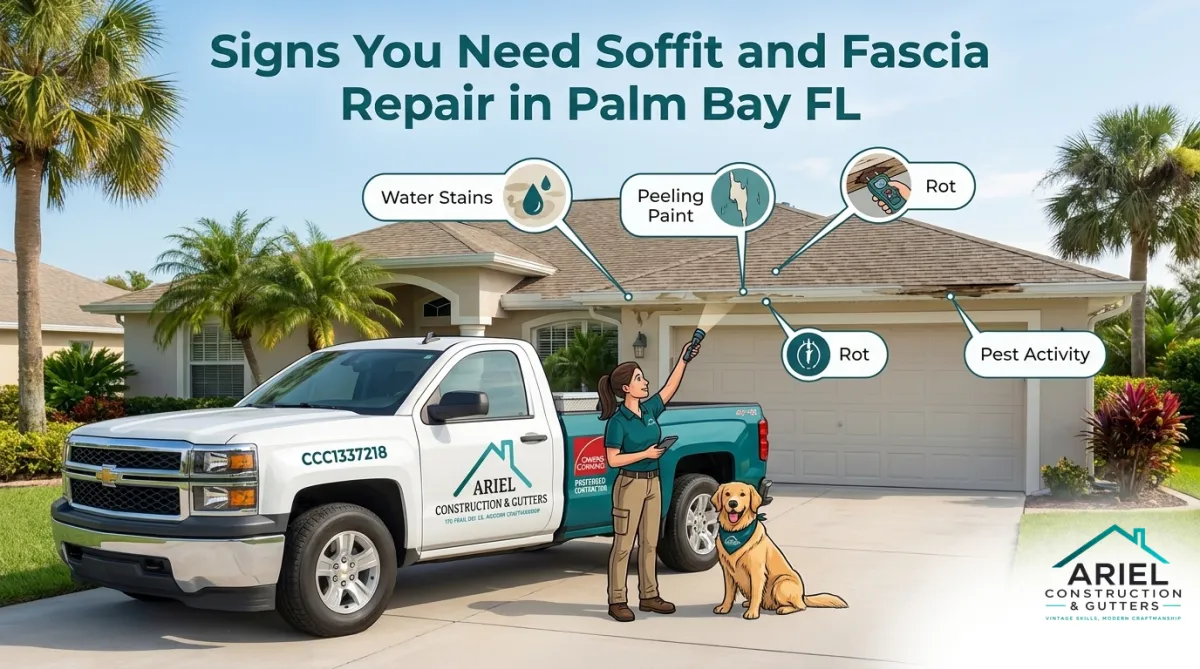
Signs You Need Soffit and Fascia Repair in Palm Bay FL
As a homeowner along Florida’s beautiful Space Coast, you know how hard our wild coastal weather can blow. When tropical storms sweep across Palm Bay or heavy summer downpours roll through, your roof acts as your first line of defense. But while we often focus on shingles or metal roofing, there’s an unsung hero quietly protecting your home’s structural core: your roof trim. If you’ve started noticing peeling paint, sagging sections, or water stains under your eaves, it’s time to talk about the warning signs that you need professional attention before minor water damage turns into a structural nightmare.
The primary Signs You Need Soffit and Fascia Repair in Palm Bay FL include peeling or bubbling exterior paint, sagging or leaking gutters, localized mold and mildew growth, crumbling or soft wood rot, and nesting pests like wasps or roof rats under your roof eaves. Catching these early symptoms prevents catastrophic moisture intrusion into your attic rafters during Florida’s intense storm seasons.
Key related topics covered here include Fascia Repair & Replacement with practical context for decision-makers.
When discussing this topic, Soffit Repair & Replacement is one of the core concepts practitioners align on—this guide explains how it fits your workflow.
What are the structural and ventilation functions of roof soffit and fascia boards?
Understanding the anatomy and functions of soffit and fascia in attic ventilation is critical to maintaining a healthy and storm-resilient home on the Space Coast. When you stand in your driveway and look up at your house, the elements that seal the edges of your roof play a major role in keeping your home dry and energy-efficient. While they might seem like simple decorative trim pieces, your roof's soffit and fascia are highly specialized components engineered to protect your home's structural framing from the elements.
The Anatomy of the Eaves: Protecting Your Home's Rafter Tails
The soffit is the horizontal board located beneath the overhanging section of your roof, bridging the gap between your home’s exterior siding and the outer roofline. The fascia, on the other hand, is the vertical finishing edge that runs along the very lip of your roof, directly holding up your gutter system. Working in tandem, they create a sealed barrier that keeps water, wind, and debris out of your rafters while giving your roofline a polished look.
How Proper Eave Ventilation Prevents Condensation and Heat Buildup
Your attic requires a continuous, balanced cycle of air movement to prevent heat and moisture from building up under your roof. Vented soffits act as the intake portal for this system, drawing in fresh, cooler air from the outdoors. As this air enters, it sweeps across the underside of your roof deck and exits through exhaust vents located at the ridge or gables of your roof. Without this steady intake, hot, humid air becomes trapped in your attic, warping your roof decking and degrading your shingles from beneath.
What are the warning signs of rotting wood, mold, and damage on your roof's trim?
Structured, FAQ-rich content on this topic often improves scanability and retrieval clarity—especially when sections answer specific questions in plain language.
Identifying the primary warning signs of decay (dry rot, crumbling wood, mold, or mildew) along your roofline allows you to address localized issues before they turn into major structural emergencies. Over time, constant exposure to moisture, UV rays, and fluctuating outdoor conditions will take a toll on even the toughest building materials. If your wood is beginning to fail, the symptoms are often easy to spot if you know where to look.
Primary Warning Signs of Decay: Dry Rot, Crumbling Wood, Mold, or Mildew
One of the clearest indicators that your fascia or soffits are failing is crumbling wood or "dry rot." Dry rot is a form of fungal decay that feasts on the cellulose within the wood, leaving it brittle, cracked, and structurally compromised. In high-humidity coastal climates, you may also see active mold or mildew spreading across the surface of your eave boards. These fungal organisms thrive on damp wood, and their presence indicates that water is bypassing your shingles or gutters and soaking directly into the trim.
Peeling, Bubbling, or Flaking Paint and Discoloration
Before the wood begins to physically crumble, you will often notice cosmetic changes such as peeling, bubbling, or flaking paint. Paint is designed to serve as a protective seal against the elements; when water gets trapped behind this barrier, it forces the paint to lose adhesion and blister. If you spot localized brown water staining, rust stains, or dark discoloration along your eaves, it is a clear warning sign that moisture is trapped inside the framing. These are telltale indications that you need professional Soffit Repair & Replacement to protect the rest of your home.
How do high humidity, intense rain, and hurricane winds damage Florida roof eaves?
The impacts of Florida's weather (humidity, tropical storms, heavy rainfall) on roof trim are constant and unrelenting. Living on the Space Coast means our homes must withstand some of the most aggressive environmental conditions in the country. From the blistering summer sun to high-velocity tropical winds, your eaves bear the brunt of the coastal climate.
Wind-Driven Rain: How Hurricanes Wet Your Rafters from Within
During a major Florida storm, rain rarely falls straight down. Instead, high-speed winds force water horizontally and even upward against your home’s exterior walls. If your soffit panels are loose, cracked, or poorly secured, wind-driven rain can blow directly into the vented cavities. Once inside, this moisture settles on your attic rafters, insulation, and drywall ceilings. Over time, this hidden water exposure rots your attic rafters from the inside out, compromising the framing, and can even cause your ceiling to sag.
The Perpetual Attack of Coastal Humidity and Salt Air
Even when we aren't facing named storms, Palm Bay’s high humidity and salt air present a daily challenge for building materials. Wood swells in high humidity and shrinks in dry weather, causing paint sealants to crack and allowing moisture to seep into the wood grain. This constant wetting-and-drying cycle makes unprotected timber highly vulnerable to rapid decay. It is why proactive Pre-Storm Inspections are so critical to identify weakened trim sections that could fail completely during the next storm season.
Why do damaged soffit vents cause attic moisture, pests, and high utility bills?
When soffit vents become clogged, damaged, or entirely detached, the internal climate of your attic degrades, creating a breeding ground for pests and driving up cooling costs. Your eave trim does more than just finish the look of your home; it serves as a critical defense against pests and thermal buildup. When your soffits or fascia are cracked, rotting, or improperly vented, your home's thermal boundary is broken.
Pest Entry Risks: How Roof Rats, Termites, and Wasps Exploit Soft Spots
Damaged eaves represent an open invitation for local wildlife looking to nest. In Palm Bay, pest entry risks are high, with species like Florida roof rats, termites, and paper wasps actively seeking out soft spots in wood trim. Roof rats are notorious for finding small cracks in rotted fascia boards, chewing through the weakened fibers, and nesting in attic insulation. Similarly, subterranean termites use damp, rotting wood as a highway into your home’s structural framing, while mud daubers and wasps clog vented soffit panels with their mud and paper nests.
The Thermal Trap: High Attic Temperatures and Skyrocketing Utility Bills
When soffit vents are clogged with dirt, paint, or pest nests, your attic's natural convective airflow grinds to a halt. In the peak of summer, an unventilated attic can easily reach temperatures exceeding 140°F. This extreme heat radiates downward through your ceiling drywall, forcing your air conditioning system to work continuously to keep your living space cool. By restoring proper eave ventilation through professional Soffit Repair & Replacement, you can lower attic temperatures and reduce your monthly utility bills.
What are the structural risks and costs of ignoring rotten fascia boards and sagging gutters?
Ignoring damaged fascia boards and failing roof trim can trigger a cascading series of structural failures that directly compromise your home’s roof deck and foundation. It can be tempting to put off minor wood trim repairs, viewing them as purely cosmetic issues. However, the fascia board is a load-bearing element that supports your entire gutter system. Leaving damaged eaves unaddressed triggers a destructive chain reaction.
The Demise of Your Gutter System: The Risk to Your Foundation
Your fascia boards serve as the structural anchor for your gutter system, particularly when we install custom 6-Inch Seamless Gutters designed to handle Florida's heavy tropical downpours. If the wood behind your gutters begins to rot, it loses its structural density and can no longer hold the gutter hangers securely. As a result, the gutters will begin to sag, tilt forward, or pull away from the roofline completely. When heavy rain hits, these compromised gutters overflow, dumping gallons of water directly next to your home's foundation, eroding your landscaping, and potentially flooding your crawlspace or slab.
The Escalating Financial Impact of Deferred Maintenance
Ignoring a rotting fascia board is a costly gamble. What starts as a simple, affordable fascia patch can quickly escalate into a full-scale roof framing repair. If water continues to seep behind the fascia, it will rot your rafter tails—the structural framing bones that hold up your roof. Replacing rotted rafter tails requires removing sections of your metal or shingle Roofing, which dramatically increases labor and material costs. Addressing these signs early with professional Fascia Repair & Replacement is always the smarter, more economical choice.
Which is better for coastal Florida homes: vinyl, aluminum, or wood soffit and fascia replacement?
When deciding on a material for your eave restoration, comparing the material differences (vinyl vs. aluminum vs. wood vs. fiber cement) is essential to maximize your investment's longevity. Different materials offer varying levels of resistance to moisture, wind, pests, and salt air. Understanding these variances helps you make an informed decision that fits both your budget and your home’s architectural needs.
Comparing the Core Eave Materials for the Palm Bay Climate
Historically, wood was the standard material for soffits and fascia. However, in our hot, humid environment, wood requires constant scraping, priming, and painting to prevent rot. Today, modern alternatives like seamless aluminum and high-grade vinyl provide exceptional durability with virtually zero maintenance.
| Material | Humidity & Salt Resistance | Maintenance Needs | Wind Resistance | Average Lifespan |
|---|---|---|---|---|
| Wood | Poor (Prone to rot) | High (Requires painting every 3-5 years) | Good | 10-15 Years (if maintained) |
| Vinyl | Excellent (Will not rot or rust) | Very Low (Occasional wash) | Moderate | 25-30 Years |
| Aluminum | Excellent (Corrosion-resistant) | Very Low (Occasional wash) | Outstanding (Highly rigid) | 30+ Years |
| Fiber Cement | Excellent (Impervious to insects) | Low (Requires painting every 10-15 years) | Outstanding | 30+ Years |
Why Low-Maintenance Upgrades Offer the Best Return on Investment
For coastal Florida homes, we highly recommend upgrading to aluminum or vinyl soffits and wrapped fascia. Aluminum wrap acts as a lifetime shield over your fascia boards, locking out moisture and preventing wood rot forever. Meanwhile, vented aluminum or vinyl soffits are completely immune to termites and pests, ensuring your attic stays ventilated and your rooflines look pristine for decades without ever needing a paintbrush.
How to safely inspect your attic and home exterior for soffit water damage
Performing a regular inspection of your roof's trim ensures you catch moisture issues before they lead to structural collapse or mold outbreaks. Identifying eave damage early is the key to minimizing repair costs. However, because these components are located high off the ground and beneath the roof line, they are often difficult to see clearly from a casual glance. Utilizing a structured, dual-perspective inspection method allows you to evaluate your home's roof trim thoroughly and safely.
The Ground Exterior Perspective: Scanning for Visual Faults
Start your inspection on a clear, bright day from the safety of the ground. Walk the entire perimeter of your home with a pair of binoculars, paying close attention to the underside of your roofline. Look for sagging panels, cracked paint, gaps between the gutter and the board, and dark stains. Pay extra attention to corners and areas where two rooflines meet, as these valley junctions are common zones for water collection and leakage.
The Attic Interior Perspective: Spotting Hidden Moisture Intrusion
Many of the worst water leaks don't show up on the outside of your house until extensive damage has already been done. To catch issues early, perform an attic inspection during our high-humidity seasons. Safely access your attic using a ladder and a high-powered flashlight. Carefully inspect the rafter tails—the ends of the wooden trusses that extend to meet your fascia. Look for dark water stains, white powdery mold growth, or soft spots in the wood. If you smell a musty odor or feel damp insulation near the eaves, it means water is breaching your soffit lines.
Dual-Perspective Eave Inspection Checklist
Perform these steps safely at the start of every high-humidity summer season:
- Exterior Ground Check: Walk the perimeter of your home on a sunny day using binoculars to scan the fascia and soffit lines.
- Paint Barrier Check: Look for cracked, flaking, or bubbled paint, which indicates trapped water beneath the wood's surface.
- Gutter Alignment Check: Search for any sagging segments of your gutters or gaps between the gutter back and the fascia board.
- Vent Clearance Check: Ensure that your soffit vents are free from dust, dirt, bird nests, or layers of paint that block airflow.
- Attic Interior Scan: Access your attic safely with a strong flashlight. Check the rafter tails directly above the eave line for dark water stains.
- Insulation Moisture Test: Feel the insulation near the edges of your roof. Damp or compressed insulation points directly to a soffit-level leak.
How to find and hire a licensed, reputable soffit and fascia repair contractor in Palm Bay FL
Selecting the right specialist for your roof trim repair requires verifying local licensing, insurance, and past project performance. When you need roofing, gutter, or trim work completed on your home, choosing the right contractor can make all the difference. Because Florida's building codes are some of the strictest in the nation, hiring an uncertified or unlicensed handyman can lead to severe structural issues, failed code inspections, and voided manufacturer warranties.
Navigating DBPR Licensing Requirements for Specialty Structure Work
In the State of Florida, work involving siding, soffits, fascia, and gutters falls under the jurisdiction of the Florida Department of Business and Professional Regulation (DBPR). Contractors performing these installations should hold a valid "Specialty Structure" contractor's license or a certified "Roofing Contractor" license. Always ask a contractor for their state license number and verify it on the DBPR's official website before signing any contracts or paying deposits.
The Local Advantage: Why Ariel Construction & Gutters LLC Stands Out
At Ariel Construction & Gutters LLC, we take immense pride in serving our neighbors throughout Palm Bay, Brevard County, and Indian River County. We bring "Vintage Skills. Modern Craftsmanship." to every single project, combining old-school work ethic and grit with the highest-quality modern materials. As a family-owned local business, we don't believe in high-pressure sales pitches or sending a revolving door of subcontractors to your home. We treat your roof and gutters like they were protecting our own family, ensuring honest pricing, expert installation, and exceptional Storm Recovery services when you need us most.
| Strategy | Why it matters |
|---|---|
| Regular Pre-Storm Inspections | Catch loose soffit panels and rot before hurricane-force winds tear them open, leading to internal attic flooding. |
| Upgrading to Aluminum or Vinyl | Drastically reduces maintenance compared to wood, which easily rots in coastal Florida's 90%+ summer humidity. |
| Securing 6-Inch Seamless Gutters | Prevents heavy tropical rainfall from overflowing onto your fascia boards, protecting the structural rafter tails from decay. |
People Also Ask
How do I tell if my soffit and fascia are rotting?
The most common signs of rot are soft, spongy wood, crumbling pieces when touched, peeling or bubbling paint, and water stains under the eaves. If your wood siding is rotting, or if gutters are pulling away from the house, the underlying fascia is likely decaying and needs immediate professional inspection.
Can you repair just a section of soffit or fascia?
Yes, localized sections of soffit and fascia can be repaired if the surrounding timber is dry, structurally sound, and free of rot. However, if water damage or termite activity has spread widely, replacing the entire run with low-maintenance aluminum or vinyl cladding is the most cost-effective long-term solution.
Is it necessary to have vented soffits in Florida?
Yes, vented soffits are crucial in Florida's hot climate. They function as the intake portion of your attic ventilation system, drawing in cooler outdoor air while pushing hot, humid air out through ridge vents. Unvented soffits cause attic temperatures to soar, trapping moisture and increasing cooling costs.
Sources & further reading
Frequently Asked Questions
How much does soffit and fascia repair cost in Palm Bay, FL?
Soffit and fascia repair costs in Florida typically range from $400 for minor, localized repairs to $5,000+ for comprehensive whole-home replacements. On average, most moderate section replacements run between $1,000 and $2,500, depending on material choice, eave height, and any underlying structural damage to the rafters.
What is the difference between soffit and fascia?
The soffit is the exposed under-hanging surface beneath your roof's eaves that protects the rafters and contains attic ventilation. The fascia is the vertical board running along the roofline's edge where your gutters are mounted, serving as the front-facing shield against wind and rain.
Can I replace fascia boards without removing the gutters?
In most cases, gutters must be taken down to replace fascia boards because the gutters are directly fastened to them. This is an ideal time to upgrade to heavy-duty 6-Inch Seamless Gutters, as reinstalling old, bent gutters onto new fascia can cause immediate leaks and re-introduce wood rot.
Are vinyl or aluminum soffits better for coastal Florida homes?
Both vinyl and aluminum are outstanding options for coastal environments. Aluminum is rust-proof, extremely wind-resistant, and won't warp in extreme heat. Vinyl is dent-resistant, budget-friendly, and completely immune to salt-air corrosion. Both significantly outperform traditional wood on the Space Coast.
Do pests like wasps and termites prefer wood fascia?
Yes, damaged and water-softened wood fascia is highly appealing to subterranean termites, carpenter bees, mud daubers, and wasps. Florida roof rats will also chew through softened wood to gain access to warm attics. Utilizing aluminum wrap or vinyl stops these pests from breaching your home.
Does homeowners insurance cover soffit and fascia damage?
Homeowners insurance typically covers soffit and fascia damage if it is caused by a sudden, accidental event, such as a fallen tree or hurricane winds. However, damage resulting from gradual wear and tear, lack of maintenance, or unresolved water leaks is rarely covered by insurance policies.
Content type: Editorial guide
Expertise: Signs You Need Soffit and Fascia Repair in Palm Bay FL
Topics: Signs You Need Soffit And rotting fascia board replacement Palm Bay soffit damage symptoms Florida homes local roof line repair services
Editorial standards: practical guidance, sourced claims when cited, and updates when practices change.
class="ugo-cta-bridge"> Teams working with Ariel Construction & Gutters LLC that adopt scalable, evidence-based approaches to Signs You Need Soffit and Fascia Repair in Palm Bay FL are better positioned for how search and AI discovery continue to evolve. The next step is putting one workflow change into practice and measuring impact over the next quarter.Ready to Get Started?
At Ariel Construction & Gutters LLC, we offer premium materials and expert installation — all backed by our hands-on experience and commitment to doing things right the first time.