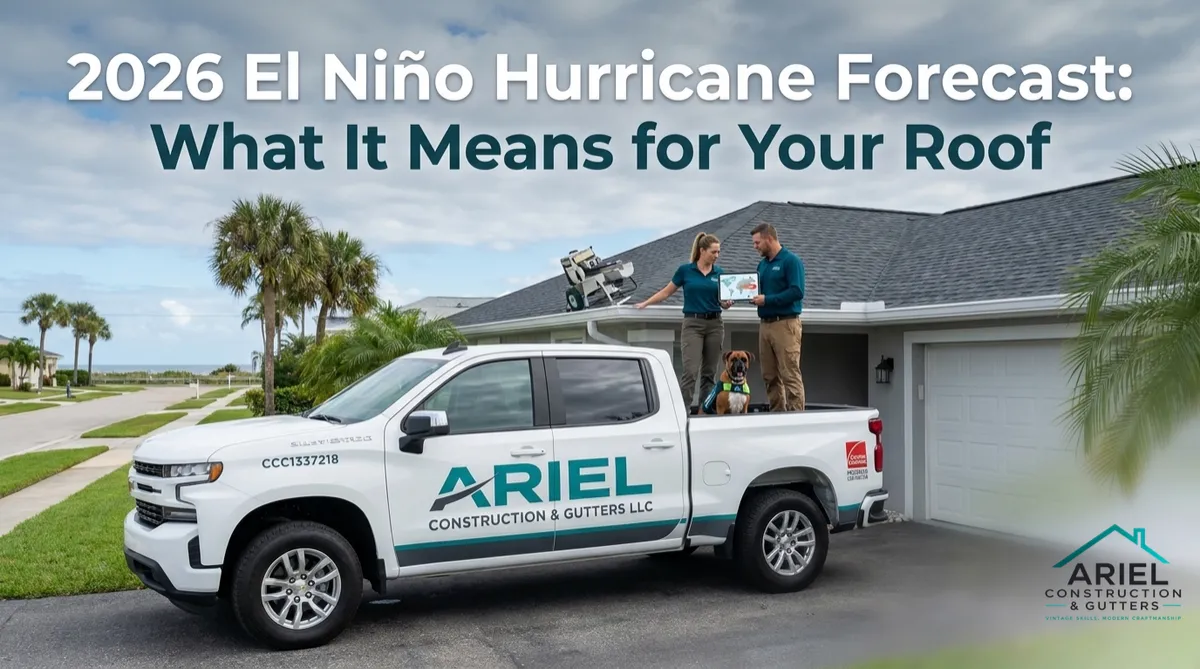
2026 El Niño Hurricane Forecast: What It Means for Your Roof
As we move into the peak of the 2026 Atlantic hurricane season, homeowners across Florida's Space Coast are looking at the skies with a mix of curiosity and caution. For months, meteorological agencies have been updating their seasonal predictions, and the overarching theme this year is shaped by a powerful, global weather pattern. At Ariel Construction & Gutters LLC, we believe in honest communication, neighborly advice, and sharing our expertise through genuine 'porch talks' rather than high-pressure sales pitches. That is why we have put together this definitive guide to help you understand exactly what the 2026 El Niño hurricane forecast means for your home, your family, and most importantly, your roof.
The 2026 El Niño Hurricane Forecast: What It Means for Your Roof is that while a strong El Niño pattern is actively suppressing overall tropical development in the Atlantic, the threat of severe roof damage remains high. Homeowners must prepare for off-season severe thunderstorms, rapid storm intensification, and high-wind events by upgrading gutters, securing soffits, and documenting their roofs before storms hit.
Key related topics covered here include Soffit Repair & Replacement, Fascia Repair & Replacement with practical context for decision-makers.
Key related topics covered here include Soffit Repair & Replacement, Fascia Repair & Replacement with practical context for decision-makers.
How does the 2026 El Niño forecast impact Atlantic hurricane activity?
During the summer of 2026, global atmospheric conditions have undergone a major shift. According to the July 8, 2026 update from the Colorado State University (CSU) Tropical Meteorology Project, researchers have significantly downgraded their seasonal outlook, projecting a well below-normal hurricane season. The revised CSU forecast estimates just 9 named storms, 4 hurricanes, and only 1 major hurricane (Category 3 or higher) for the entire Atlantic basin. Similarly, the National Oceanic and Atmospheric Administration (NOAA) has projected a 55% probability of a below-normal season. This is a dramatic contrast to typical years, which average around 14.4 named storms and 7.2 hurricanes.
The primary driver behind this quiet forecast is a strong, intensifying El Niño event in the Pacific Ocean. Although El Niño originates thousands of miles away, its atmospheric ripple effects are global. El Niño warms the waters of the central and eastern Pacific, which alters global wind patterns and drives high levels of vertical wind shear across the Caribbean and tropical Atlantic basin.
Understanding the Physics of Vertical Wind Shear
Vertical wind shear is defined as a rapid change in wind speed and direction with height. In the tropical Atlantic, El Niño produces strong westerly winds in the upper levels of the atmosphere. These upper-level winds run directly counter to the easterly trade winds blowing near the ocean's surface. This opposing motion acts like an atmospheric lawnmower, literally ripping developing tropical systems apart before they can align vertically, organize, and grow into dangerous hurricanes.
The Threat of Ocean Heat and Rapid Intensification
While wind shear acts as a protective shield, it is not a perfect guarantee of safety. Local ocean temperatures in the Gulf of Mexico and the western Atlantic remain near record highs. If a tropical disturbance manages to find a localized pocket of low wind shear, these warm waters can supercharge the system. This leads to "rapid intensification," where a storm's wind speeds increase by at least 35 mph in under 24 hours. This phenomenon leaves coastal residents with almost no time to coordinate last-minute structural repairs or emergency roof upgrades.
Does a below-average 2026 hurricane season mean less risk of roof damage?
Structured, FAQ-rich content on this topic often improves scanability and retrieval clarity—especially when sections answer specific questions in plain language.
It is easy to look at a below-average forecast and assume that your property is safe from storm damage. However, relying on seasonal numbers is one of the most dangerous mistakes a Florida homeowner can make. A quieter ocean does not guarantee a quieter coastline, and historical records prove that quiet years can produce devastating landfalls.
Consider 1992, which was a strong El Niño year with a highly suppressed Atlantic forecast. That season produced only six named storms, yet one of those few storms was Hurricane Andrew—a Category 5 monster that obliterated neighborhoods in South Florida and permanently reshaped state building codes. Similarly, Hurricane Michael in 2018 caught many off-guard, developing rapidly and making landfall as a Category 5 storm in a generally quieter climatological context. These historical anomalies prove that a suppressed season does not equal a safe season.
Why Space Coast Homes Face High Vulnerability
For homeowners in Brevard County and Indian River County, even a weak Category 1 hurricane or a strong tropical storm can cause severe roof damage. Sustained winds of 75 mph, accompanied by localized wind gusts exceeding 90 mph, are more than capable of lifting older shingles, damaging soffit systems, and tearing away fascia. Additionally, water intrusion does not require a Category 5 hurricane; a slow-moving, low-level tropical storm dumping 15 inches of rain will quickly exploit minor cracks, failed flashing, or clogged gutters, leading to extensive interior damage.
How does El Niño cause off-season severe weather and roof leaks?
The impact of El Niño on your roof is not confined to the official June-to-November hurricane window. In fact, one of the most overlooked aspects of an El Niño pattern is its dramatic influence on Florida's cool-season weather. During the fall, winter, and early spring, El Niño alters the path of the subtropical jet stream, pinning it further south across the Gulf Coast and Florida peninsula.
This jet stream shift acts as a superhighway for low-pressure systems, driving off-season severe thunderstorms, cool-season rain, and coastal flooding across our local communities. Instead of our typical dry winters, an El Niño winter often brings repeated rounds of heavy rain, high winds, and hail. This persistent barrage of moisture and wind can be incredibly taxing on your home's exterior, slowly degrading materials and creating silent, slow-burning structural issues.
The Jet Stream Shift: Cool-Season Rains and Slow Rot
Unlike the sudden, dramatic destruction of a major hurricane, off-season severe weather inflicts "death by a thousand cuts." Repeated thermal expansion, heavy downpours, and wind-driven rain slowly wash away the protective mineral granules on asphalt shingles. Once these granules are lost, the underlying asphalt is exposed to harsh UV rays, causing shingles to crack, curl, and lose their waterproofing capability. Furthermore, prolonged winter dampness prevents minor roof leaks from drying out, fostering attic mold growth and rotting the structural roof decking long before the next summer storm season arrives.
What steps should you take to prepare your roof for a major storm?
True storm resilience is built during the calm periods. When a storm is actively spinning in the Atlantic, it is already too late to schedule critical repairs, trim trees, or secure materials. Proactive, preventative maintenance is the absolute best way to mitigate costly water damage and protect your home.
To help our Space Coast neighbors prepare, we recommend a targeted pre-storm maintenance routine focusing on the most vulnerable areas of your roof and drainage systems.
Clearing Drainage Systems and Upgrading Gutters
Your gutters are your roof's primary defense against water pooling and fascia rot. During torrential tropical downpours, standard 5-inch gutters are easily overwhelmed, causing water to back up under the shingle starter strips or overflow onto your home’s foundation. Upgrading to 6-Inch Seamless Gutters ensures your drainage system has the capacity to handle heavy, El Niño-driven tropical rainfall. Ensure all gutters and downspouts are entirely cleared of leaves, pine needles, and debris so water can flow freely away from the structure.
Securing Your Roof Perimeter: Soffits and Fascia
High winds don't just push down on a roof; they create powerful uplift forces. The roof perimeter is particularly vulnerable to these forces. If wind slips beneath your roof's overhang, it can tear away compromised soffit panels and pressurize your attic. This internal pressurization, combined with external suction, is a leading cause of total roof blow-offs. Scheduling a Soffit Repair & Replacement and verifying the integrity of your fascia boards ensures the perimeter of your roof remains sealed against high-velocity winds. Additionally, tree trimming is critical—ensure all overhanging limbs are cut back at least 6 to 10 feet from your roofline to prevent them from breaking off and acting as battering rams during a storm.
How do you check if your roof can withstand hurricane-force wind speeds?
Understanding your roof's current wind resistance capacity is critical to securing peace of mind. A roof that looks perfectly fine from the driveway may actually have hidden structural vulnerabilities that could fail during a major wind event. To accurately assess whether your roof can withstand hurricane-force wind speeds, a combination of DIY observation and professional analysis is required.
The safest and most thorough method is to schedule professional Pre-Storm Inspections. A licensed local roofer will examine the entire roofing system, from the attic trusses to the ridge caps, to identify weak points that need immediate attention.
The Role of Professional Wind Mitigation Inspections
In Florida, a professional wind mitigation inspection is a highly valuable tool. During this inspection, a certified inspector assesses specific wind-resistant features of your home, such as the roof-to-wall connection (e.g., clips or hurricane straps), the nail spacing on your roof deck, and the presence of secondary water barriers. Not only does this inspection identify critical structural gaps, but it is also the primary mechanism for securing significant discounts on your property insurance premiums. In an era of rising insurance costs, a documented wind mitigation report can save you hundreds, if not thousands, of dollars annually.
DIY Visual Checks from the Ground
While you should never climb onto your roof yourself, you can perform a basic visual inspection from the ground using a pair of binoculars:
- Look for lifting or curling shingles: Shingles that are not fully sealed to the deck are easily caught by the wind and peeled away.
- Check the flashing: Ensure the metal flashing around chimneys, vents, and valleys is securely fastened and free of rust.
- Examine the ridge vents: Verify that your ridge vents are firmly attached; loose vents are easily ripped off, leaving a massive opening for wind-driven rain to pour directly into your attic.
What are the best wind-resistant and impact-resistant roofing materials?
If your roof is approaching the end of its lifespan, or if you are planning major structural upgrades, selecting the right materials is the single most important decision you can make. Modern roofing technology has advanced significantly, offering materials specifically engineered to survive the brutal wind speeds and heavy impacts associated with coastal Florida storms.
When planning a roof replacement, look for materials that feature high wind ratings and Class 4 impact resistance. Here is a breakdown of the leading wind-resistant roofing systems available today:
Comparison of Storm-Ready Roofing Materials| Material Type | Wind Resistance Rating | Impact Resistance Class | Key Benefits for Space Coast Homeowners |
|---|---|---|---|
| Standing Seam Metal | Up to 140–160+ MPH | Class 4 (Highest) | Interlocking panels eliminate exposed fasteners, preventing wind uplift; highly durable and sheds water rapidly. |
| Wind-Rated Asphalt Shingles | Up to 110–130 MPH | Class 3 or 4 | Cost-effective option featuring reinforced fiberglass mats and high-performance adhesive strips (Class H rating). |
| Concrete or Clay Tile | Up to 125–150 MPH | Class 3 or 4 | Extremely heavy and durable; highly resistant to rot, though installation requires reinforced framing to support the weight. |
Critical Structural Reinforcements
Beyond the outer roofing material, a truly storm-resistant roof relies on what lies beneath. Upgrading your roof decking attachment with ring-shank nails (which have twice the holding power of standard smooth nails) drastically reduces the risk of decking panels blowing off. Furthermore, installing robust hurricane straps or truss clips mechanically binds your roof rafters to your home's load-bearing walls, creating a continuous load path that prevents the wind from lifting the entire roof structure off the house.
Why is documenting your roof's pre-storm condition crucial for insurance claims?
When a major storm strikes, the immediate aftermath is often chaotic. Navigating the insurance claim process can be an incredibly stressful experience, especially if you are forced to fight for the payout you deserve to restore your home. One of the single best ways to protect yourself and fast-track your claim is by creating a comprehensive digital visual baseline of your roof before any storm ever threatens our coast.
Insurance companies are businesses, and their primary goal in the wake of a natural disaster is to minimize their financial exposure. A very common tactic used by adjusters is to claim that the damage to your roof was 'pre-existing wear and tear' or the result of poor maintenance, rather than wind or hail from the recent storm. Without proof of your roof's pre-storm condition, it becomes your word against theirs, often resulting in denied claims or severely reduced payouts.
Creating Your Digital Visual Baseline
To safeguard your home and investment, follow this simple process to document your roof’s baseline condition:
- Take High-Resolution Photos: Walk around your property and take clear, bright photos of your roof from every possible angle. Capture the overall structure, as well as close-ups of your gutters, soffits, and fascia.
- Record Video Footage: Slowly pan across your roofline, narrating the date and noting the condition of the materials. A continuous video is incredibly difficult for insurance adjusters to dispute.
- Keep Digital Copies: Upload your photos and videos to a secure cloud storage drive (like Google Drive or iCloud) and keep a copy on an external flash drive in your physical emergency kit. This ensures that even if your phone is damaged or lost during a storm, your proof remains perfectly safe.
- Save Inspection Reports: Keep copies of any professional Pre-Storm Inspections or maintenance invoices. A written report from a licensed roofing company is gold standard evidence in an insurance claim.
What should you do after a hurricane to safely inspect your roof for damage?
In the hours and days following a major storm, taking immediate and safe action is crucial to protecting your home from further damage. However, post-storm recovery requires a balance of urgency and extreme caution. Your first priority must always be safety.
Many post-storm injuries occur when homeowners climb onto wet, compromised roofs or walk near downed power lines. At Ariel Construction & Gutters LLC, we always urge our neighbors to keep their feet firmly planted on the ground and let professionals handle the high-altitude assessments.
Navigating the Threat of Out-of-State Storm Chasers
One of the greatest dangers homeowners face after a major storm isn't the weather—it's the influx of out-of-state 'storm chasers.' These are predatory, door-to-door sales crews who flood storm-affected neighborhoods offering 'free roofs' or promising to handle your insurance claim for you. They often pressure homeowners into signing an Assignment of Benefits (AOB) agreement, which hands over all control of your insurance claim to their company. Once they receive the insurance payout, they may perform subpar, rushed work using cheap materials—or worse, disappear entirely, leaving you with an unfinished roof and a voided warranty.
Always protect yourself by sourcing verified, local, family-owned contractors with deep roots in the community. At Ariel Construction & Gutters LLC, we live and work right here on the Space Coast. We offer dedicated Storm Recovery services with the vintage skills, modern craftsmanship, and honest communication you expect from a neighbor.
A Safe Post-Storm Assessment Protocol
If a storm hits your area, follow these steps to safely inspect your roof:
- Inspect from the ground first: Use binoculars to check for missing shingles, exposed underlayment, damaged flashing, or sagging gutters.
- Check your attic: Go inside your attic with a flashlight to look for active leaks, water stains on the rafters, or damp insulation. Catching water intrusion early prevents mold and structural rot.
- Watch for structural sag: If you notice any dipping or sagging in your roofline, do not enter the home, as this indicates a severe structural compromise.
- Take post-storm photos: Document all visible damage from the ground to match against your pre-storm digital baseline.
Your Storm-Ready Roof Checklist
Use this practical checklist to ensure your home's roof and drainage systems are fully prepared before a storm approaches Florida's coast.
- Inspect and Clear Gutters: Verify that your 6-Inch Seamless Gutters are free of debris and fully secured to the fascia.
- Check Soffits and Fascia: Ensure there are no rotting boards or loose panels that wind can pull loose.
- Trim Tree Limbs: Cut back branches hanging within 6 to 10 feet of your roofline.
- Capture Pre-Storm Photos: Build your digital visual baseline with high-resolution, date-stamped photos.
- Schedule an Inspection: Get a professional, certified wind mitigation or Pre-Storm Inspection.
Key Takeaways: Preparing for the 2026 Season
Essential Roofing Strategies for El Niño Years| Strategy | Why It Matters |
|---|---|
| Understand the 2026 Forecast | CSU and NOAA project a below-normal season (9 named storms), but localized risks of rapid intensification remain extremely high. |
| Prepare for Off-Season Weather | El Niño drives wet, stormy winters in Florida, causing progressive shingle damage and slow-developing water leaks. |
| Upgrade Your Drainage | Installing 6-Inch Seamless Gutters prevents fascia rot and water pooling from torrential tropical rain. |
| Avoid Out-of-State Scammers | Hire only local, verified contractors for Storm Recovery to ensure quality work and valid warranties. |
People Also Ask
How does El Niño affect the 2026 hurricane season?
During the 2026 season, El Niño creates high levels of vertical wind shear over the Atlantic basin. This wind shear acts to rip apart developing tropical storms, suppressing overall hurricane activity and resulting in a below-normal seasonal forecast.
Does El Niño mean Florida won't get hit by a hurricane?
No, El Niño does not guarantee that Florida will escape a hurricane landfall. Historical seasons with below-average activity, such as 1992 (Hurricane Andrew), have produced catastrophic landfalls. It only takes one storm to cause devastating property damage.
Why are 6-inch seamless gutters better for storm prep than 5-inch gutters?
Six-inch seamless gutters can hold and channel up to 40% more water volume than traditional 5-inch gutters. This extra capacity is crucial during intense tropical downpours to prevent water from backing up under shingles or overflowing onto your home's foundation.
Frequently Asked Questions
What is the 2026 Atlantic hurricane season forecast?
The 2026 Atlantic hurricane season is forecast to be well below-average due to a strong El Niño. Colorado State University (CSU) predicts 9 named storms, 4 hurricanes, and 1 major hurricane, while NOAA predicts a 55% chance of a below-normal season.
How does vertical wind shear protect roofs?
Vertical wind shear doesn't directly protect roofs, but it suppresses the formation and strength of hurricanes. By ripping apart storm structures over the ocean, wind shear reduces the number of intense storms that could make landfall and damage your home.
What are the signs that my soffits or fascia need repair?
Signs that you need soffit and fascia repair include peeling paint, rotting wood, water stains, mold growth, or sagging gutter lines. Compromised soffits and fascia can easily fail during high winds, leading to catastrophic roof failure.
Are metal roofs better than shingles for hurricane winds?
Yes. Standing seam metal roofs are highly wind-resistant, often rated to withstand winds up to 140-160+ mph. They lack exposed fasteners, which prevents wind uplift, making them highly resilient compared to standard asphalt shingles.
How can a wind mitigation inspection save me money?
A wind mitigation inspection certifies that your home has key wind-resistant features, such as hurricane straps or impact-rated materials. In Florida, insurance companies are required by law to offer premium discounts for homes with these certified protections.
What is a "storm chaser" in the roofing industry?
Storm chasers are out-of-state roofing companies that travel to storm-damaged areas to pressure homeowners into signing over their insurance benefits (AOB). They often do subpar work, use low-quality materials, and leave before the warranty can be serviced.
How often should I have my roof inspected on the Space Coast?
We recommend scheduling a professional roof inspection at least once a year, preferably in the spring before the Atlantic hurricane season begins, or immediately following any major severe weather event.
Can El Niño cause roof damage during the winter?
Yes. El Niño drives the jet stream south, bringing severe winter storms, cool-season rain, and high winds to Florida. This prolonged exposure to moisture can cause shingles to degrade, gutters to clog, and slow roof leaks to develop.
Content type: Editorial guide
Expertise: 2026 El Niño Hurricane Forecast
Topics: 2026 El Niño Hurricane Forecast: 2026 hurricane roof preparation guide El Niño impact on storm roof damage how to windproof a roof for hurricanes
Editorial standards: practical guidance, sourced claims when cited, and updates when practices change.
class="ugo-cta-bridge"> Teams working with Ariel Construction & Gutters LLC that adopt scalable, evidence-based approaches to 2026 El Niño Hurricane Forecast: What It Means for Your Roof are better positioned for how search and AI discovery continue to evolve. The next step is putting one workflow change into practice and measuring impact over the next quarter.Ready to Get Started?
At Ariel Construction & Gutters LLC, we offer premium materials and expert installation — all backed by our hands-on experience and commitment to doing things right the first time.